

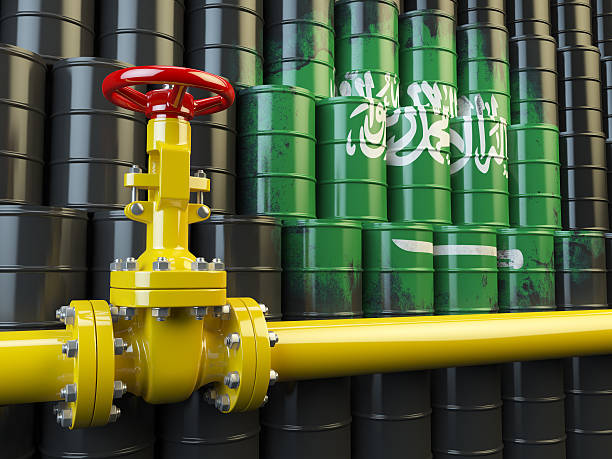
Saudi Aramco, the state oil company of the world’s largest crude exporter, has raised the premium it charges Asian customers for its main oil grade — Arab Light — to $19.50 above the Oman-Dubai benchmark for May deliveries. In 26 years of recorded data, that premium has never crossed $10. European customers are being asked to pay even more: $24 to $30 above the Brent benchmark, which is itself trading around $108 a barrel.
Every grade of Saudi oil, to every destination, is now priced at record levels. However, according to ship tracking data, Saudi Arabia managed to export only around 50% of its normal volumes in March. Higher prices are not compensating for the fact that half the oil is not moving.
The Strait of Hormuz Has Become a Wall
The reason is geography. The vast majority of Saudi Aramco’s exports ordinarily load in the Gulf, but Iran’s control of the Strait of Hormuz — the narrow waterway through which roughly one-fifth of the world’s oil normally passes — has forced a drastic rerouting. Aramco is now pumping as much crude as possible through a cross-country pipeline to its Red Sea port of Yanbu, which is handling more shipments than ever before. It is not enough to cover the shortfall.
The disruption extends well beyond Saudi Arabia. The UAE can export some oil through the port of Fujairah, but all other Gulf producers face the same chokepoint. Qatar’s attempts to export liquefied natural gas through the strait appeared to have been abandoned on Monday. OPEC+ agreed on Sunday to increase production in May, but the decision is largely symbolic – the cartel’s spare production capacity sits in the Gulf, trapped behind the very bottleneck it cannot solve.
Some vessels from China, India and Oman have made it through the strait. Iran has indicated that Iraqi ships may pass freely, and Pakistan claims to have negotiated safe passage for 20 ships under its flag. But these are exceptions. The waterway remains heavily restricted, and the refineries feeling the pain most acutely are in Asia – facilities specifically built to process the heavy, sour crude grades that come predominantly from the Middle East and have no easy substitutes.
Record Premiums on Half the Volume Is Not a Pricing Strategy — It Is a Warning
When the world’s largest oil exporter doubles its prices while shipping half its normal output, the market is not adjusting — it is signalling distress. Saudi Arabia is extracting maximum value from the barrels it can move, but the gap left by the barrels it cannot is a problem no pricing decision can fix.
The OPEC+ production increase announcement is worth examining closely here. On paper, it says the cartel is responding to the crisis by pumping more. In practice, the additional capacity is landlocked behind the Strait of Hormuz, making the announcement close to meaningless in the near term. It is the kind of institutional response that looks decisive on a press release and changes very little on the ground — a dynamic that anyone who has watched regulators respond to fast-moving crises will find familiar.
The countries absorbing the most pain are Asian refiners with no alternative supply source and European buyers now paying $24 to $30 above the benchmark for oil they cannot easily replace. Both groups are, for now, paying whatever Saudi Arabia is asking. The question is how long that remains the only available option.
