

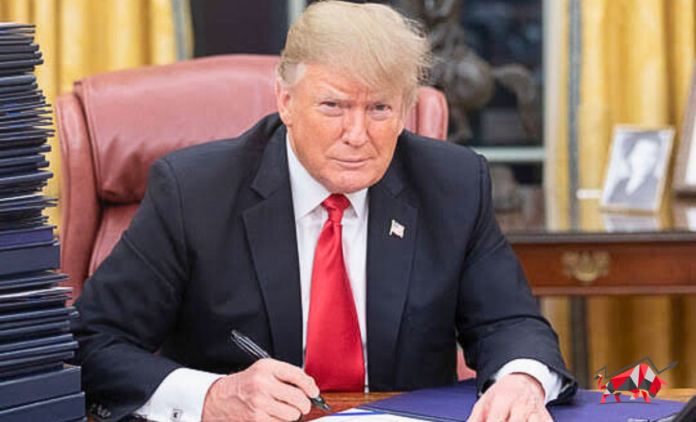
Donald Trump made clear on Wednesday that neither the economic pain of the Iran war nor its political consequences will push him toward a deal with Tehran. Speaking at a cabinet meeting at the White House, Trump said he did not “care” about this year’s midterm elections and was unconcerned about surging energy prices, arguing that Americans “understand” the aims of the conflict. “They know that very simply, Iran cannot have a nuclear weapon. I’m doing that for the world, I’m not doing it just for us,” he said.
The comments came as Trump’s approval ratings slide toward record lows, weighed down by a deepening cost of living crisis driven by the effective closure of the Strait of Hormuz. Petrol and diesel prices have risen sharply across the US, and the pressure on consumers and businesses is mounting. Trump’s position, stated plainly, is that he is willing to absorb that political cost in pursuit of a nuclear agreement that meets his terms — or no agreement at all.
A Deal That Was Not a Deal
Wednesday’s session was shaped by a false start. Iranian state television earlier broadcast details of a proposal to extend the ceasefire and reopen the Strait of Hormuz, briefly raising hopes of a breakthrough and sending Brent crude sharply lower. The report said Iran would commit to restoring shipping through the waterway to prewar levels within a month if a memorandum of understanding were reached, with the US lifting its naval blockade on Iranian ports in return. Iranian TV later deleted the report without explanation. The White House called it a “complete fabrication”.
By the end of the day, Brent settled 5.3% lower at $94.29 a barrel — a significant move driven by hope of a deal that turned out not to exist. The episode illustrated how sensitive oil markets have become to any signal from the negotiations, and how quickly those signals can reverse.
The Terms Trump Will and Will Not Accept
Trump’s cabinet meeting remarks laid out his red lines with unusual clarity. He will not accept a short-term deal. He will not allow Russia or China to take possession of Iran’s highly enriched uranium stockpile. He will not ease sanctions on Iran or unfreeze its foreign assets, which Tehran has identified as a core demand. “We’ll keep control of that money,” he said.
On the Strait of Hormuz itself, Trump was characteristically direct when asked whether Iran and Oman could be handed joint control of the waterway. “Nobody is going to control it. It’s international waters, and Oman will behave just like everybody else, or we’ll have to blow them up,” he said.
Trump also appeared to link any Iran deal to a broader regional realignment, suggesting that Saudi Arabia and Qatar normalising ties with Israel should be a condition of the US reaching an agreement with Tehran. “I think they owed that to us,” he said. “I’m not sure we should make the deal if they don’t sign.” The FT has previously reported that the draft framework under discussion would extend the April 8 ceasefire by 60 days, gradually reopen the strait as Iran cleared mines, and open formal talks on Iran’s nuclear programme.
This War Ends on Trump’s Terms or It Does Not End
The clearest signal from Wednesday is not what Trump said about Iran — it is what he said about domestic politics. A president who openly declares indifference to midterm elections while approval ratings fall and fuel prices rise is either supremely confident in his position or willing to absorb damage that most politicians would find intolerable. Possibly both.
From a markets perspective, the practical consequence is that the Strait of Hormuz remains closed for longer than optimists have priced in. Every failed negotiation round, every deleted Iranian broadcast, every White House denial extends the timeline of supply disruption that is feeding through into inflation, interest rate expectations, and the cost of running airlines, refineries, and economies that depend on oil moving freely through that waterway. Trump has decided the nuclear question is worth that cost. Markets are still working out whether they agree.
