

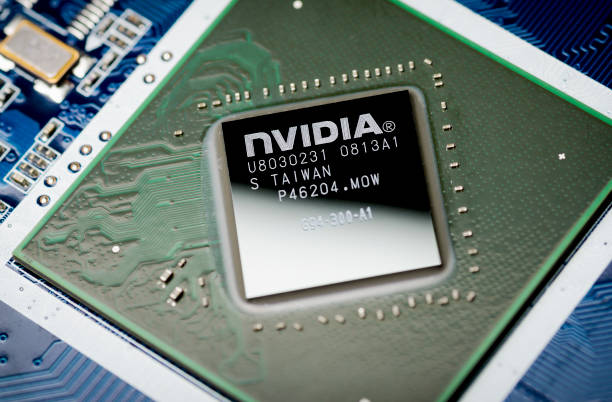
Nvidia’s board approved a $150 billion increase to its share buyback programme on Monday, the largest single buyback authorisation in US corporate history, surpassing the $110 billion record set by Apple in 2024. The Nvidia share buyback brings the company’s total authorised repurchase capacity to $235 billion before January 2028. Shares closed 1.7% higher on Monday following the announcement.
The scale of the buyback reflects the extraordinary cash generation Nvidia has achieved as the dominant supplier of chips powering the AI boom. Goldman Sachs forecasts that AI investment will exceed $1 trillion this year, with Nvidia’s chips serving as the core infrastructure for the large language models behind ChatGPT, Claude and Gemini. The company’s shares have risen more than 1,200% since OpenAI launched ChatGPT in late 2022, though momentum has slowed in 2026 with the stock up approximately 20% year to date as investors increasingly question the sustainability of the AI investment cycle.
Related: ECB Warns AI Stock Market Correction Could Hit Europe
What the Buyback Actually Signals
Jensen Huang, Nvidia’s co-founder and CEO, framed the announcement as a statement of confidence. “Nvidia’s growth is being driven by a once-in-a-generation platform shift to AI and accelerated computing,” he said. “Our cash generation gives us the capacity to invest in the technologies that advance this transformation and return capital to shareholders.”
The market typically reads large buyback authorisations as a signal that management believes its shares are undervalued. But there is a second, less flattering interpretation that analysts are raising openly: large capital returns at this scale are historically associated with companies whose growth has matured to the point where reinvestment opportunities are no longer sufficient to absorb the cash being generated. For a company that has grown 1,200% in under four years, the question of whether a $150 billion buyback reflects confidence or a plateau in reinvestment opportunity is not a trivial one.
Nvidia Share Buyback Is a Bet on Itself at a Complicated Moment
I think the $150 billion number needs to be held alongside two other data points to be understood properly. First, the AI investment cycle that has driven Nvidia’s profits is showing its first signs of maturation, with stock growth slowing to 20% in 2026 after years of triple-digit returns. Second, the global bond market selloff covered in this publication is pushing capital costs higher across the board, which historically compresses the valuations of high-multiple technology stocks.
A company returning $235 billion to shareholders while the cost of capital is rising and its own growth rate is decelerating is making a specific bet: that its stock is cheap relative to what its future earnings will be, and that no better use of that cash exists within the business. Jensen Huang may be right about that. Nvidia’s position at the top of the AI supply chain remains structurally dominant and difficult to displace quickly.
But the timing of the world’s largest ever buyback, announced as questions about AI investment sustainability are becoming more mainstream and bond yields are at multi-decade highs, is worth watching carefully. The best buybacks are made from a position of strength. The risk is that this one is also being made at a moment when the cycle it depends on is closer to its peak than its beginning.
