

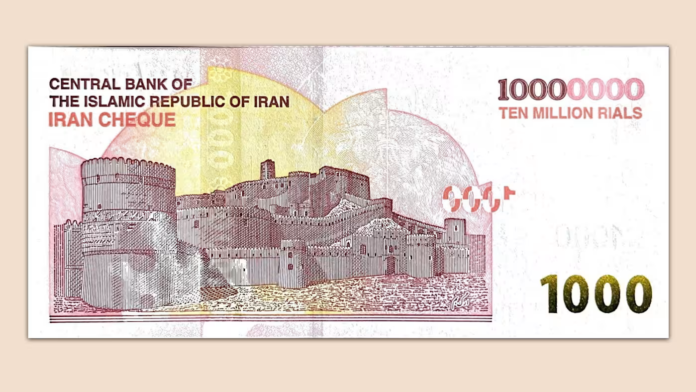
Iran has introduced a new 10 million rial banknote, its highest-ever denomination, as authorities struggle to manage spiralling inflation and meet surging demand for physical cash during the US-Israel war that has crippled the country’s financial infrastructure.
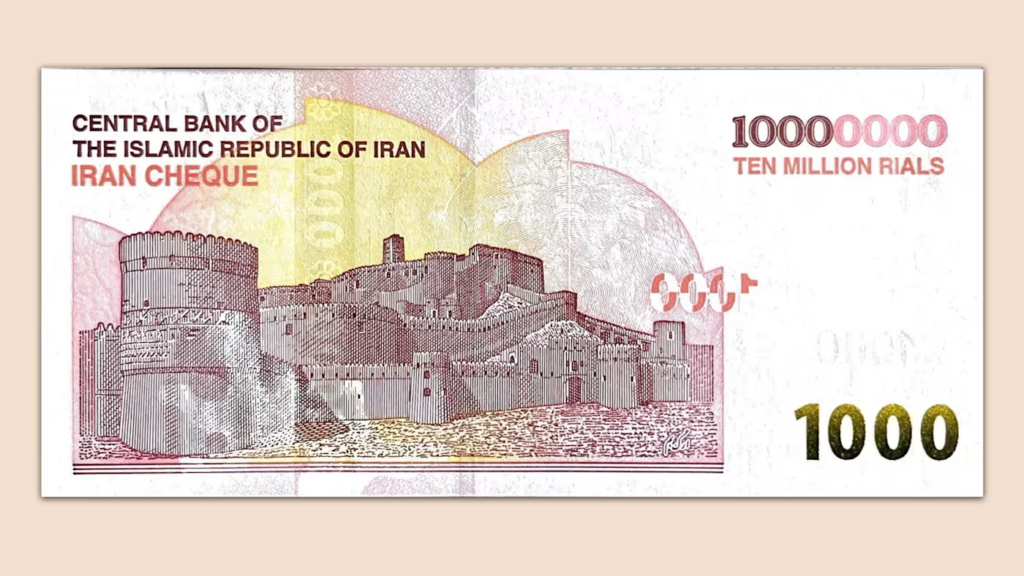
Banks began distributing the new note this week, worth approximately $7, as Iranians queued in long lines at ATMs to withdraw currency amid fears electronic systems could collapse. Many cash machines quickly ran out. The pink banknote features a vignette of the 9th-century Jameh Mosque of Yazd on the front and an image of the 2,500-year-old Bam Citadel on the back, now surpassing the 5 million rial note introduced in early February as the highest denomination in circulation.
Banking Infrastructure Targeted as Economy Strains
Iran’s central bank stated the bill was introduced “to ensure public access to cash”, adding that electronic systems—including debit cards, mobile and internet banking—would continue serving as primary platforms for financial transactions. However, despite government assurances of continuous cash supply after war broke out, banks are providing limited currency to clients seeking withdrawals.
The new banknote represents the latest indication of Iran’s economic struggles as fighting enters its fourth week. US and Israeli forces have targeted infrastructure, including a major bank, compounding strain on businesses already impacted by constant bombardments and indefinite airspace closure. Imported items have become more expensive as trade routes shut down.
A Bank Sepah building, which serves Iran’s armed forces alongside the general public, was struck by a missile on March 11, further amplifying public concerns. The bank announced Wednesday that access had been restored, allowing clients to use cards for in-store shopping and at ATMs, with online banking services expected to resume soon.
Currency Collapse Reflects Years of Economic Pressure
The economy was already under severe strain from years of US sanctions, declining oil revenues, persistently high inflation and systemic corruption—factors that have driven steep rial devaluation. The currency lost approximately 40% of its value in months following Israel’s 12-day war last June, with economic malaise fuelling mass protests in January that were crushed in a brutal crackdown, killing thousands.
The rial weakened further to a record low of 1.66 million per US dollar ahead of the latest war’s February 28 start, though it had strengthened to approximately 1.5 million as of Friday. Annual inflation stood at 47.5% in the month ending February 19, according to Iran’s statistical agency.
When Denominations Measure Currency Death
Introducing a 10 million rial note worth $7 perfectly illustrates currency collapse in real time—the denomination keeps climbing while purchasing power keeps falling, requiring ever-larger bills to conduct basic transactions in an economy where trust in the banking system has evaporated. The fact that this is Iran’s second highest-denomination launch in six weeks (following the 5 million rial note in February) signals accelerating rather than stabilising inflation despite official 47.5% figures that likely understate reality.
The rush to physical cash amid fears of electronic system failure reveals what happens when war destroys not just infrastructure but also confidence in financial institutions, forcing people back to literal paper money even as hyperinflation makes that paper increasingly worthless, creating the economic conditions where alternative stores of value—whether dollars, gold, or potentially cryptocurrencies for those with access—become essential survival tools rather than speculative investments.
