

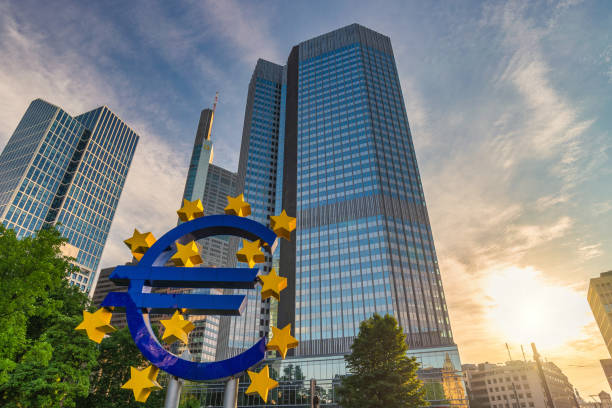
The European Central Bank has issued one of its starkest public warnings in years, cautioning that US President Donald Trump risks triggering a financial crisis through the combination of the Iran war, erratic trade policy, and a withdrawal from multilateral global leadership. The warning came in the ECB’s twice-yearly financial stability review, published Wednesday, with outgoing vice president Luis de Guindos writing in his final review before stepping down at the end of May that the Middle East conflict is putting the resilience of the financial system “to the test”.
“While the full impact of the war is unclear at this stage, the repercussions for the global economy and financial stability are becoming graver the longer it lasts,” de Guindos said. The ECB pointed to a dangerous combination of factors converging simultaneously — stretched asset valuations, high government debt levels of questionable sustainability, oil-driven inflation, and slowing growth — as the conditions under which a geopolitical shock could escalate into something systemic.
On trade, the ECB was unusually direct, saying that “tariff announcements, pauses and reversals have become a structural feature of the global environment” and that uncertainty around Washington’s commitment to multilateral cooperation is increasing the risk that policy shocks will fragment the international order.
AI, Cyber Threats and a Model Called Mythos
Beyond the macroeconomic risks, the ECB flagged a concern that has received less attention: the threat of cyber attacks and hybrid warfare targeting critical financial infrastructure. The central bank warned that new AI models are increasing the danger of cyber attacks capable of causing “severe and widespread disruption”.
That warning had a specific backdrop. ECB summoned eurozone lenders to a meeting on Tuesday to discuss IT vulnerabilities exposed by the latest AI models, specifically referencing Anthropic’s Claude Mythos Preview — a new model that eurozone-based banks have been refused access to. A large US bank with access to Mythos gave a presentation about the model’s capabilities at the meeting. “Banks have to invest much more in cyber security; not only large banks but small banks can be systemic here too,” de Guindos told reporters.
When the World’s Second Most Powerful Central Bank Calls Out the US President by Name
Central banks choose their words carefully. The ECB naming Trump directly — his war, his trade policy, his retreat from global cooperation — in a formal financial stability document is not routine language. It is a considered institutional statement that Europe’s monetary authority believes American political decisions have become a primary source of financial risk to the eurozone.
The private credit warning buried deeper in the review deserves attention too. The ECB flagged the shift of high volumes of lending away from regulated banks and into private credit markets as a growing vulnerability, particularly if rising borrowing costs driven by persistent oil inflation push more borrowers into distress. Hedge funds now hold significant positions in eurozone sovereign bond markets, and the ECB warned that their price sensitivity could amplify any sudden reassessment of government debt risk.
Taken together, the review paints a picture of a financial system carrying multiple simultaneous vulnerabilities — stretched valuations, sovereign debt concerns, energy inflation, AI-enabled cyber risk, and opaque private credit exposure — at a moment when the political anchor that historically stabilised global markets is itself a source of uncertainty. That is an uncomfortable combination, and the ECB is saying so publicly.
