

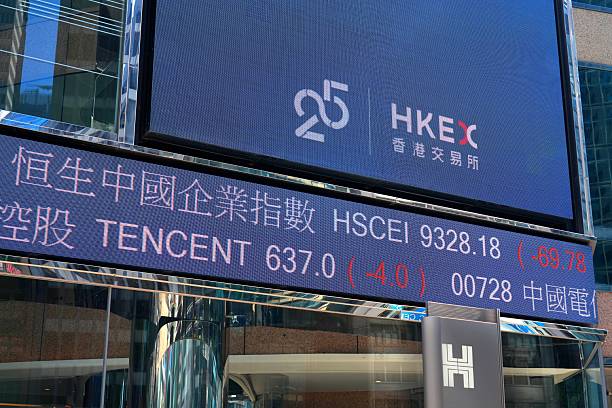
Hong Kong Exchanges and Clearing announced on Friday that it will allow dual-class share structures for a broader range of companies and permit confidential IPO filings for all applicants. The Hong Kong stock exchange listing rules changes, first outlined in a consultation paper in March, are designed to bring the city’s regulatory regime closer to those of US exchanges like Nasdaq, where dual-class structures are common and anonymous filings are standard practice. Katherine Ng, head of listing at HKEX, called the changes “a major step in enhancing the flexibility and diversity of Hong Kong’s listing regime”.
The context is difficult to ignore. Of the IPO funds raised in Hong Kong this year, $31.9 billion came from Chinese companies across 90 listings. Hong Kong-origin companies contributed just $126 million across two deals. The exchange’s business is overwhelmingly Chinese, and US markets continue to attract the global listings that HKEX wants.
A Welcome From Bankers, A Warning From Governance Advocates
The financial industry’s response was divided along predictable lines. Bankers welcomed the changes as a necessary competitive adjustment. Corporate governance advocates raised concerns about the extension of weighted voting rights to smaller companies, arguing that retail shareholders — who lack the class-action litigation rights that protect US investors — bear the risk when founders or early backers retain disproportionate control.
“If you allow more weighted voting rights issuers to Hong Kong, especially smaller ones, that will be shifting the governance risks to retail shareholders,” said Lake Wang, research head for Greater China at the Asian Corporate Governance Association. The absence of class-action mechanisms in Hong Kong means retail investors have limited recourse if controlling shareholders abuse their position — a protection that is imperfect in the US but largely absent in Hong Kong.
Copying Nasdaq’s Rules Will Not Make Hong Kong into Nasdaq
The structural problem HKEX faces is not its listing rules. It is its listings. Despite repeated announcements about attracting non-Chinese companies, the exchange remains overwhelmingly dependent on mainland Chinese issuers. Relaxing governance standards to match US exchanges addresses one friction point in the listing process, but it does not resolve the deeper question of why global companies choose New York over Hong Kong when both options are available.
The confidential filing provision is genuinely useful — it allows companies to test regulatory appetite before committing publicly to a listing process. The dual-class structure extension gives founder-led businesses more flexibility. But “competition among exchanges is clearly intensifying,” as Lyndon Chao of ASIFMA noted, and the gap between Hong Kong and its rivals is not primarily a rules gap. It is a liquidity gap, an investor base gap, and increasingly a geopolitical perception gap that no consultation paper can close. Hong Kong is right to modernise its listing framework. It should be honest with itself about how much that modernisation will actually move the needle.
