

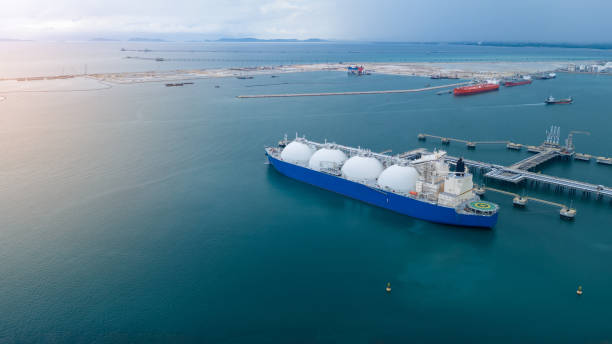
US energy group Caturus on Friday announced funding commitments for Commonwealth LNG, a liquefied natural gas export facility in Cameron Parish, Louisiana, capable of producing 9.5 million tonnes per year. The project has secured $9.75 billion in financing toward a total cost of $13 billion, with equity contributions from Mubadala Energy — a subsidiary of Abu Dhabi’s sovereign wealth fund — alongside Canada’s CPP Investments, BlackRock, Ares Management, and EOC Partners. Caturus itself is backed by US investment group Kimmeridge, whose managing partner Ben Dell chairs the Commonwealth LNG project.
The facility was the first LNG export project to receive a vital export permit under the Trump administration and has secured other key approvals from US authorities, accelerating a timeline that similar projects have historically struggled to meet.
The Iran War Rewrote the LNG Market
The strategic logic behind the investment is direct. The Strait of Hormuz closure has disrupted roughly one-fifth of global LNG flows, forcing buyers across Europe and Asia to look urgently for supply that does not pass through Iranian-controlled waters. “The biggest shift that has occurred in the market today is in LNG,” said Dell. “Buyers have to look for security of supply, and they have to diversify, which has been driving them towards taking more US cargoes.”
For Abu Dhabi, the investment carries a particular significance. Mubadala Energy is effectively helping finance American export capacity that will compete with — or compensate for — Middle Eastern supply that can no longer reliably reach global markets. It is a pragmatic response to a crisis that has directly undermined the Gulf’s own export revenues and reliability as a supplier.
The Commonwealth LNG deal is part of a broader pattern of Gulf capital flowing into US energy infrastructure since the Iran war began. Last month, UAE state energy company Adnoc announced plans to invest tens of billions of dollars building a US natural gas business. In November, Saudi Aramco signed 17 agreements with US companies with a potential combined value of more than $30 billion.
The Gulf Is Investing in the Infrastructure That Replaces It
There is a striking irony at the centre of this story that deserves to be named plainly. Abu Dhabi’s sovereign wealth fund is financing the construction of American LNG export capacity at the precise moment that Middle Eastern supply disruption has made that capacity valuable. The Gulf states are not just losing market share to US energy — they are funding the infrastructure that accelerates the shift.
This is not irrational. Gulf producers understand that the Hormuz closure has structurally damaged confidence in Middle Eastern energy reliability, possibly permanently. Investing in US LNG gives them exposure to the supply source that buyers are now racing toward, even if that supply competes with their own. It is the same logic that drives any incumbent to invest in the technology disrupting it — it is better to own part of the future than to be entirely displaced by it. For global energy markets, the message is that the Iran war has not just created a short-term supply shock. It is actively redrawing where the world’s LNG infrastructure gets built for the next several decades.
