

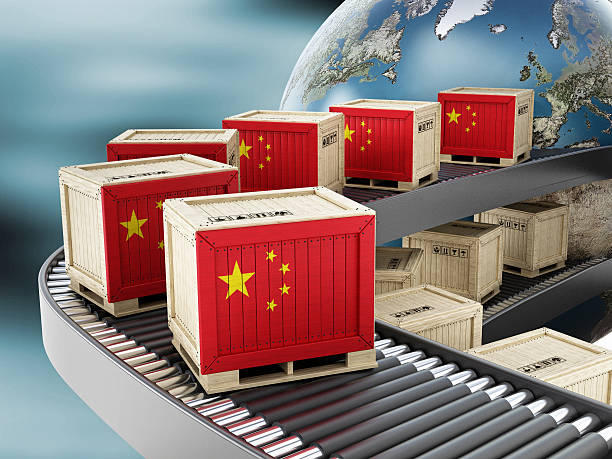
China’s exports grew 14.1% year on year in April in dollar terms, rebounding sharply from 2.5% growth in March and comfortably beating the analyst consensus of 8.5%, according to data released Saturday by China’s General Administration of Customs. Imports rose 25.3% year on year, slightly below March’s 27.8% but well ahead of the 20% forecast, reflecting both higher commodity prices and a modest improvement in domestic demand. China’s trade surplus widened to $84.8 billion in April, up from $51.1 billion in March and in line with the elevated levels seen through much of the post-pandemic period.
The data landed days before the high-stakes summit in Beijing between Xi Jinping and Donald Trump, and its message is difficult to ignore. Despite US tariffs, despite the Iran war disrupting global trade flows, and despite a sharp dip in March, China’s export engine accelerated. “The rebound in exports after last month’s dip underscores the strength of China’s high-end manufacturing, especially in electronics and machinery,” said Hao Zhou, chief economist at Guotai Junan International Holdings.
A War That Hurt Others More Than It Hurt China
China entered the Iran conflict better prepared than most. The country had built up record stockpiles of oil and other commodities ahead of the US and Israeli strikes in late February, giving it a buffer against the supply disruptions that have hit energy-dependent economies like India and Japan far harder. The April import figures show that buffer is absorbing rather than eliminating the pressure — higher commodity prices are feeding through into import costs — but China is not experiencing the kind of acute energy stress that has forced other Asian nations into emergency measures.
The country has also benefited indirectly from the war’s disruption to competing exporters. With supply chains under strain globally, buyers have continued turning to China for electronics, machinery, ships, and industrial goods that are difficult to source elsewhere quickly. The dominance of Chinese manufacturing across those categories — built over decades and deepened by state support — has proven more resilient to geopolitical disruption than many analysts expected.
Strong Export Data Going Into a Trump Summit Is a Negotiating Card
China’s April trade numbers are not just an economic story. They arrive at a moment of acute geopolitical significance, and the timing matters. Trump heads into Beijing this week carrying pressure to show progress on the Iran ceasefire, on Hormuz, and on the broader economic relationship with China. Xi heads into the same room with data showing that American tariffs have not materially slowed Chinese export growth, that China’s trade surplus is wide and widening, and that Chinese manufacturers are gaining ground in high-end sectors the US has specifically tried to protect.
From a market’s perspective, strong Chinese export data in this environment is a reminder of something the Iran war has reinforced repeatedly — that disruption does not affect all economies equally. The countries with diversified supply chains, commodity stockpiles, and dominant manufacturing positions absorb shocks. The countries without them pay for it. China has spent two decades building the former. The April numbers show that investment is holding up precisely when it is most needed.
