

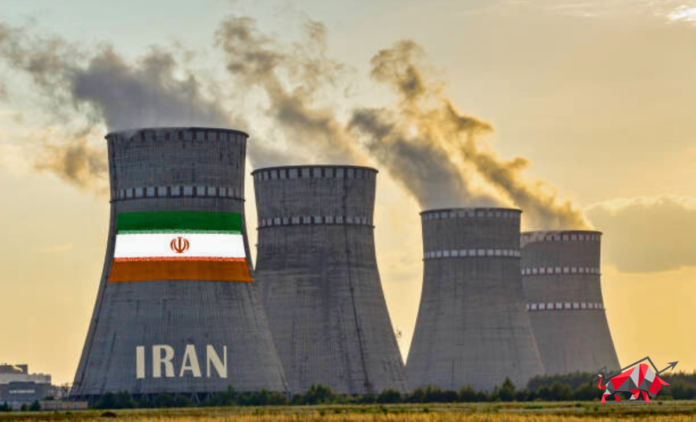
The Middle East conflict is creating severe shortages of naphtha, a critical component for plastics production, threatening temporary plant closures across Asia and accelerating the collapse of Japan’s and South Korea’s struggling petrochemical industries.
Japan and South Korea, which had already been shuttering underperforming facilities before the Iran war, now face acute naphtha shortages. Both countries import roughly two-thirds of their naphtha supply, with approximately 60% of South Korea’s imports and 70% of Japan’s coming from the Gulf region, according to oil information provider Sparta Commodities.
Supply Shock Hits Already Struggling Industry
“It’s like an iceberg hitting a ship that is already capsizing,” said Jorge Molinero, lead naphtha analyst at Sparta Commodities. “The Iran escalation adds a meaningful layer of stress on top of an already fragile situation.” Analysts predict the supply disruption will accelerate industry consolidation, as both nations had been closing ageing petrochemical facilities due to chronic overcapacity from China.
Naphtha prices have surged by half since last month to $800 per tonne, but supply has become extremely difficult to secure after retaliatory Iranian attacks effectively shut shipping through the Strait of Hormuz. South Korea’s trade minister told reporters Friday the country would restrict naphtha exports to preserve domestic supply.
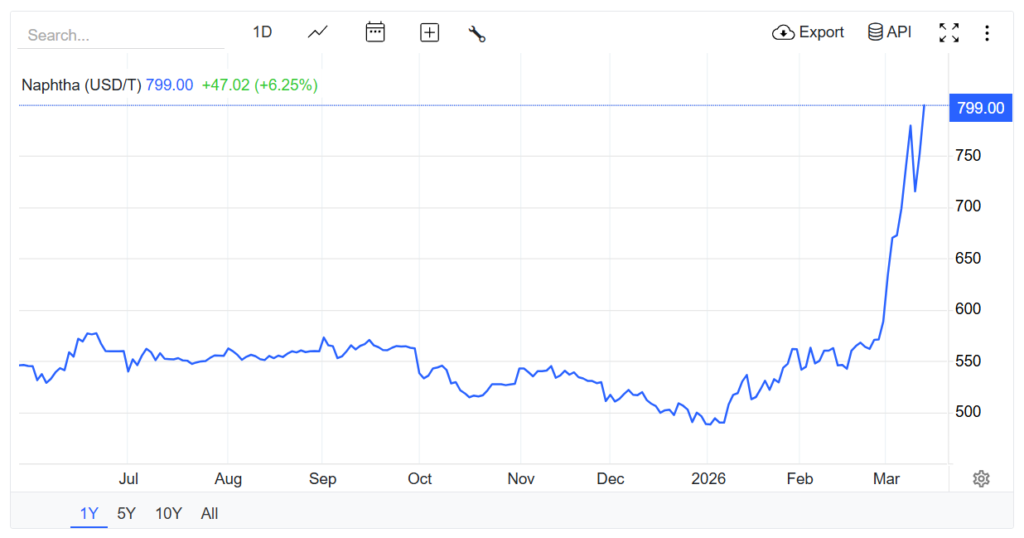
Source: https://tradingeconomics.com/commodity/naphtha
Petrochemical facilities across Asia have begun cutting output dramatically. Yeochun NCC, South Korea’s largest single ethylene producer, declared force majeure last week and reported operating at minimum capacity. In the past three days, Lotte Chemical and LG Chem warned customers they may be unable to fulfil contractual obligations. Producers that haven’t declared force majeure are cutting operating rates to approximately 60% from the previous 80 to 90 percent range.
Limited Stockpiles Provide Minimal Buffer
In Japan, Mitsubishi Chemical and Mitsui Chemicals have reduced production, while Idemitsu Kosan has warned customers of potential halts at two facilities if shortages persist. Japan-based Citi analysts warned that if market conditions don’t improve by mid-April, “multiple ethylene facilities risk production cuts or shutdowns” with derivative products, including ethylene, propylene and butane, starting to face impacts.
South Korea maintains just two weeks of naphtha inventory, according to its trade ministry, while Citi estimates Japan holds 20 days of supply—roughly the standard stockpile level petrochemical producers typically maintain. ‘Naphtha has limited storage availability since it’s not a major product for oil refineries, which prioritise producing higher-value goods such as jet fuel, diesel and heating oil,’ said Ajay Parmar, analyst at research group ICIS.
The two Asian nations have struggled to compete against China, which has constructed integrated refinery-petrochemical complexes that are significantly more competitive. They’ve also been squeezed by higher feedstock and power costs, shrinking domestic markets and weak currencies. China has been partially shielded from the current crisis due to its domestic crude refining capacity and ability to source from Russia, which US allies like Japan and South Korea cannot easily access due to sanctions.
The US announced Thursday it would allow countries to purchase Russian oil stranded at sea in an effort to contain rising energy prices. Both Japan and South Korea were already closing underperforming facilities and consolidating, given petrochemicals’ importance for defence and supply chain resilience.
When Just-in-Time Meets Just-in-Case Reality
The naphtha crisis exposes the fundamental fragility of just-in-time supply chains that optimise for efficiency rather than resilience. Japan and South Korea holding only two to three weeks of inventory made perfect economic sense when Gulf supplies flowed reliably, but those thin buffers now threaten industrial shutdowns when a single chokepoint closes. This isn’t unique to petrochemicals—modern global supply chains systematically underinvest in redundancy because carrying extra inventory or maintaining alternative suppliers reduces quarterly profits, right up until geopolitical shocks prove those savings were false economies.
The broader lesson applies beyond plastics: systems designed for maximum efficiency in stable environments become catastrophically vulnerable when stability disappears, whether that’s naphtha supplies from the Gulf, semiconductor components from Taiwan, or financial infrastructure dependent on centralised intermediaries that can be sanctioned, frozen or weaponised when political winds shift.
