

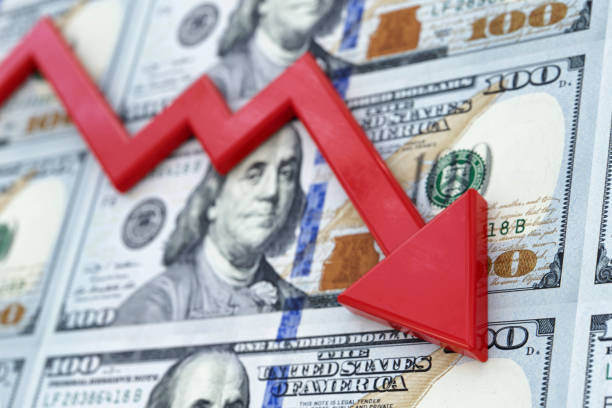
Institutional investors have adopted the most negative stance on the US dollar in more than a decade as unpredictable American policymaking drives the currency to multi-year lows and prompts asset managers to reassess their exposure to dollar-denominated investments.
The dollar has declined 1.3% this year against a basket of major currencies, including the euro and pound, adding to a 9% drop in 2025. The currency is now hovering near a four-year low as investors question America’s traditional role as the world’s safe-haven destination for capital.
Record Bearish Positioning Since 2012
A Bank of America survey published on Friday, the 13th of February, revealed that fund managers’ dollar exposure has fallen below last April’s low point, when President Donald Trump rattled global markets with sweeping tariff announcements. The positioning data represents the most negative sentiment toward the greenback since at least 2012, the earliest year for which the bank maintains records.
The shift in sentiment reflects mounting concerns about Trump’s aggressive geopolitical actions and mounting pressure on institutions, including the Federal Reserve, which have raised questions about the United States’ stability and attractiveness for international investment.
Options data from CME Group confirms the trend, showing bets against the dollar have outstripped positive wagers so far this year, reversing the pattern from the fourth quarter of 2025. Risk reversals—options strategies that indicate directional bets—show expectations for further dollar depreciation versus the euro at levels only previously witnessed during the Covid-19 pandemic and following Trump’s April 2025 tariff shock.
Pension Funds Hedge Against Further Weakness
Major asset managers report the dollar’s decline reflects a fundamental shift among long-term institutional investors such as pension funds, which are either implementing hedges against additional weakness or actively reducing their dollar asset allocations.
“Some of the volatility over the past year has led investors to question the historically low [dollar] hedge ratios they have held on US assets,” said Roger Hallam, head of global rates at Vanguard. He identified this reappraisal of US allocations and hedging positions as a “key driver” of the currency’s recent drop.
JPMorgan Asset Management has actively built short dollar positions in recent weeks. “We still see an environment where the dollar can weaken from here,” said Iain Stealey, international chief investment officer for global fixed income, currency, and commodities at the firm.
Can Policy Chaos Break Dollar Dominance?
The institutional exodus from dollar positions raises a critical question: can political dysfunction actually undermine the greenback’s reserve currency status? For decades, the dollar has maintained dominance through a combination of deep liquid markets, rule of law, and predictable institutions. Trump’s approach threatens that final pillar.
When the president publicly attacks the Federal Reserve chair, considers criminal investigations into monetary policy decisions, and implements erratic trade policies that swing wildly based on social media posts, it fundamentally alters the risk calculation for holding dollar assets. Institutional investors operate on decades-long time horizons—they need stability more than they need returns.
The currency’s decline to four-year lows despite the Fed maintaining relatively high interest rates signals something beyond normal market dynamics. Typically, higher yields attract capital and support currency values. The fact that dollar positioning has turned this negative while US rates remain elevated suggests investors are pricing in institutional risk premium rather than simply responding to yield differentials.
For cryptocurrency markets, dollar weakness creates a complex dynamic. Bitcoin often benefits from currency debasement fears and declining confidence in fiat systems, which supports the bullish narrative. However, most crypto trading still uses dollar-denominated pairs, and institutional capital flows into digital assets primarily come through US-based products like spot ETFs. A weaker dollar with heightened policy uncertainty could simultaneously validate crypto’s decentralization thesis while making US-based crypto products less attractive to international investors.
The real test comes if dollar weakness accelerates beyond controlled depreciation into a genuine crisis of confidence. At that point, we’d likely see capital flow into both traditional alternatives like gold and euro-denominated assets, as well as decentralized alternatives like Bitcoin that operate outside any single nation’s monetary policy framework.
